


Equipment
3E Equipment
2E Equipment
Magic Items
Articles
Helm of Seirus
by Sven Myrin
Edition: l AD&D 2e l D&D 3e (original) l
The original 2nd Edition entry from the Forge.
Write up by Sven Myrin. Contest Design Winner February 4, 2000.
It was during the Three Brothers War in the northern realms that this fell helm was originally created. Prince Seirus of Ixpar was successfully campaigning against his siblings and it seemed as if his ascension to the throne was inevitable. This was due, in large part, to the efforts of the Blood Knights, the prince's most celebrated and experienced regiment in his armies. Citing the strengths and triumphs of his forces, Prince Seirus entreated his brothers to bring an end to the war, offering them riches and positions of power if they would accept his proposal.
Blinded by jealousy and greed, the two quarreling brothers refused and joined forces against their more powerful brother, vowing to fight to the bitter end. Fearing another year or more of war and with the kingdom's stability at stake, Prince Seirus commissioned his archmages to create objects of power that could be used to bring the war to a conclusion as soon as possible.
The helmet of Seirus was one of several items fashioned and although the war was ended quickly, it extolled a high price. Only twelve helmets were made each of which was empowered with the essence of a slain demon. Once completed, the helms were given to the twelve most distinguished of the Blood Knights. The power of the helmets was immediately felt as battles in the field were won with increasing frequency even in the shadow of the combined armies of the two brothers. However, toward the end of the war, the knights began to exhibit evil tendencies, torturing their prisoners, killing the innocent, and corrupting those under their command.
Eventually, the prince became aware of the atrocities committed by the Blood Knights and through careful investigation discovered the true nature of the helms. He ordered the twelve be captured but word leaked out and the knights rebelled against their own cutting down friend and foe alike. In the end, only seven of the knights were killed while the others escaped swearing revenge against the prince and the kingdom. It is not known how many of the original helmets survived but it is said the prince has destroyed two of them himself. Of the five Blood Knights that escaped, none have ever been seen again. Dark rumors circulate that their return shall herald the end of the rule of King Seirus.
Statistics:
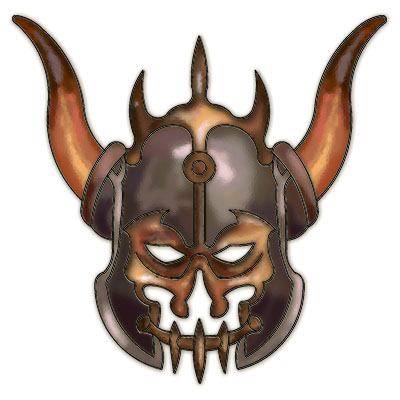
The helmet of Serius is made of interwoven bulette plates and adorned with the horns of the largest minotaurs. It provides an armor class bonus of +2 but only to attacks targeted against the head. Wearing the helm provides complete immunity from fear and an unconquerable morale. The plate surrounding the eyes has been enchanted to provide the wearer the following abilities limited by field of view only; detect magic, detect invisibility, detect traps (magical nature only), and can see ethereal or phased creatures as a ghost-like form. In addition, with respect to illusions, the wearer is considered to have an intelligence four points higher than normal.
The helmet has also been enchanted with a permanent protection from evil. Wearing the helm into battle causes the helm to assume the visage of a leering demon's head which causes fear in all intelligent creatures under 4 hit dice without a save and those under 6 hit dice if they fail a saving throw versus magic.
Initially, the helms worked as planned, but after a short period of ownership, the possessors began to discover additional powers precipitated by the evil demon essences. After a month of use, the helm began to alter the wearers alignment, slowly changing them into chaotic evil. Every two months thereafter, the wearer would suffer an alignment shift but not with the usual level loss penalties. Each shift produced an additional ability. The first shift afforded the wearer the spell-like ability of pyrotechnics useable once per turn at will. The second shift provided the wearer with a permanent tongues spell. When the wearer finally makes the last shift to chaotic evil, the helm brings to life the visage of the demon's head. This last power only becomes active when the wearer is in hand to hand combat. The head of the wearer becomes real providing an additional bite attack causing 1-6 points of damage. Any successful bite attack causes the victim to save versus spells or suffer the effects of cause serious wounds as per the spell.
These hidden abilities only become known after an alignment shift. They cannot be identified, although the lore behind the helmets may reveal some of its secrets. Once a wearer has become chaotic evil, the helm cannot be removed short of severing the head. Removing the helmet beforehand and the owner suffers a level loss for each shift in alignment that occurred. When found these helmets always appear as if they have just been severed from the body of the last owner.
As submitted to the site's 3e section; shown unchanged.
It was during the Three Brothers War in the northern realms that this fell helm was originally created. Prince Seirus of Ixpar was successfully campaigning against his siblings and it seemed as if his ascension to the throne was inevitable. This was due, in large part, to the efforts of the Blood Knights, the prince's most celebrated and experienced regiment in his armies. Citing the strengths and triumphs of his forces, Prince Seirus entreated his brothers to bring an end to the war, offering them riches and positions of power if they would accept his proposal.
Blinded by jealousy and greed, the two quarreling brothers refused and joined forces against their more powerful brother, vowing to fight to the bitter end. Fearing another year or more of war and with the kingdom's stability at stake, Prince Seirus commissioned his archmages to create objects of power that could be used to bring the war to a conclusion as soon as possible.
The helmet of Seirus was one of several items fashioned and although the war was ended quickly, it extolled a high price. Only twelve helmets were made each of which was empowered with the essence of a slain demon. Once completed, the helms were given to the twelve most distinguished of the Blood Knights. The power of the helmets was immediately felt as battles in the field were won with increasing frequency even in the shadow of the combined armies of the two brothers. However, toward the end of the war, the knights began to exhibit evil tendencies, torturing their prisoners, killing the innocent, and corrupting those under their command.
Eventually, the prince became aware of the atrocities committed by the Blood Knights and through careful investigation discovered the true nature of the helms. He ordered the twelve be captured but word leaked out and the knights rebelled against their own cutting down friend and foe alike. In the end, only seven of the knights were killed while the others escaped swearing revenge against the prince and the kingdom. It is not known how many of the original helmets survived but it is said the prince has destroyed two of them himself. Of the five Blood Knights that escaped, none have ever been seen again. Dark rumors circulate that their return shall herald the end of the rule of King Seirus.
Statistics: The helmet of Serius is made of interwoven bulette plates and adorned with the horns of the largest minotaurs. It provides an armor deflection bonus of +2 but only to attacks targeted against the head. Wearing the helm provides complete immunity from fear and an unconquerable morale. The plate surrounding the eyes has been enchanted to provide the wearer the following abilities limited by field of view only; detect magic, detect invisibility, detect traps (magical nature only), and can see ethereal or phased creatures as a ghost-like form. The wearer receives a +4 to all Will saves to disbelieve illusions.
The helmet has also been enchanted with a permanent protection from evil. Wearing the helm into battle causes the helm to assume the visage of a leering demon's head which causes fear in all intelligent creatures under 4 hit dice without a save and those under 6 hit dice if they fail a Will save (DC 15).
Initially, the helms worked as planned, but after a short period of ownership, the possessors began to discover additional powers precipitated by the evil demon essences. After a month of use, the helm began to alter the wearers alignment, slowly changing them into chaotic evil. Every two months thereafter, the wearer would suffer an alignment shift but not with the usual level loss penalties. Each shift produced an additional ability. The first shift afforded the wearer the spell-like ability of pyrotechnics useable once per turn at will. The second shift provided the wearer with a permanent tongues spell. When the wearer finally makes the last shift to chaotic evil, the helm brings to life the visage of the demon's head. This last power only becomes active when the wearer is in hand to hand combat. The head of the wearer becomes real providing an additional bite attack causing 1d6 damage. Any successful bite attack causes the victim to make a Will save (DC 20) or suffer the effects of inflict serious wounds as if cast by a 10th leve spellcaster (3d8+10).
These hidden abilities only become known after an alignment shift. They cannot be identified, although the lore behind the helmets may reveal some of its secrets. Once a wearer has become chaotic evil, the helm cannot be removed short of severing the head. Removing the helmet before the final transformation, causes the owner to suffer a level loss for each shift in alignment that occurred. When found these helmets always appear as if they have just been severed from the body of the last owner.
l News l Links l About the Raven l Sitemap l
Original content ©1999–2001 Brian D Swedorski. New content ©2025–2026 Jeff. User-submitted material remains the property of its respective authors.